Tap a numbered place to see what it is. Some sketches have their own numbered details. The dashed line shows the suggested walk.
Illustrated grounds map
Schematic map · Gion lies northwest and Ōtani Cemetery southwest of the temple. Follow signs on site. Temple map and wheelchair route
Find a landmark
Suggested walking route
From gate to waterfall
Allow about 60–90 minutes for the main route. Tap any stop to see what to look for and why it matters. Follow signs if a path or hall is closed.
Visiting a place of worship
It’s fine to watch quietly and leave room for people who are praying. If you want to pay respects in the Main Hall, bow slightly and bring your palms together. Follow signs and staff instructions for photography and access.
Where purification is offered, use the provided scoop as instructed and keep your lips off the scoop. For incense, use the designated burner and follow the temple’s instructions.
Kiyomizu-dera belongs to one Buddhist school, Kita Hossō. Its grounds bring together several traditions of worship. The Main Hall centers on Kannon. A nearby hall is tied to Pure Land chanting, the large pagoda holds sacred imagery from Shingon Buddhism, and a small Shinto shrine honors a guardian of the Buddhist temple itself.
That last stop helps explain the relationship. For centuries in Japan, Buddhist and Shinto practices shared sacred spaces. The Kasuga shrine was established on these grounds to honor a guardian of Kiyomizu-dera’s Buddhist tradition. That history is visible today in where the buildings stand and whom they honor.
New to Buddhism? Three terms to know
Buddha. The historical Buddha, Siddhartha Gautama, taught a path to freedom from suffering. A buddha is an awakened being. Amida and Dainichi are other buddhas honored in Buddhist tradition.
Awakening. In Buddhism, this means seeing clearly what causes suffering and finding freedom from it.
School. A Buddhist school is a tradition with its own teachings and practices. Kita Hossō is the school Kiyomizu-dera belongs to. Zen is another branch of Buddhism, known for seated meditation.
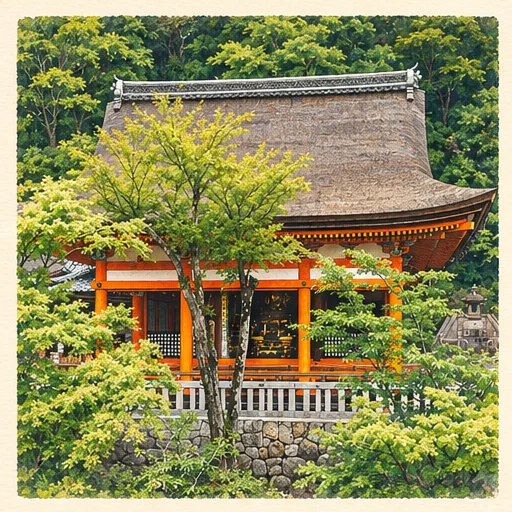
Main Hall · Hondō
Kannon and compassion
Who. Kannon embodies compassion. Buddhists call a figure who is dedicated to helping others reach awakening a bodhisattva. Kannon’s eleven faces suggest seeing suffering in many directions, and the many arms suggest all the ways Kannon can help.
What happens here. At the Main Hall, visitors bow and join their palms to ask for help, give thanks, or reflect on compassion. The same figure also gives the stage its purpose. Performers who offer music or theater to Kannon face the hall.
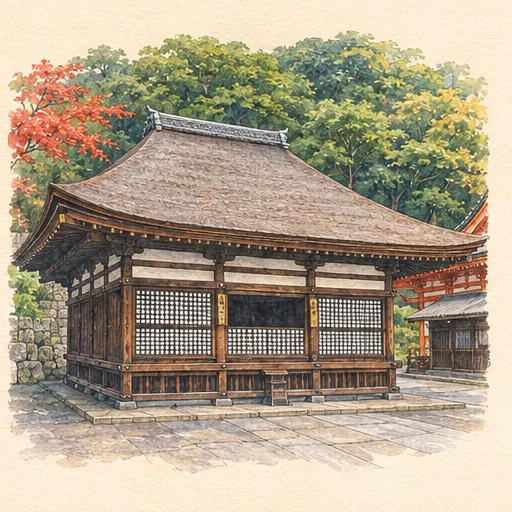
Amida Hall · Amida-dō
Amida and the Pure Land
Who. Amida is the Buddha of Infinite Light and Life. In Pure Land Buddhism, people hope to be reborn in Amida’s Western Pure Land, a realm where they can continue toward awakening.
What happens here. The Japanese monk Hōnen taught people to say “Namu Amida Butsu,” meaning roughly “I place my trust in Amida Buddha.” This chant is called nembutsu. At the West Gate, the setting sun helps people picture Amida’s Pure Land.
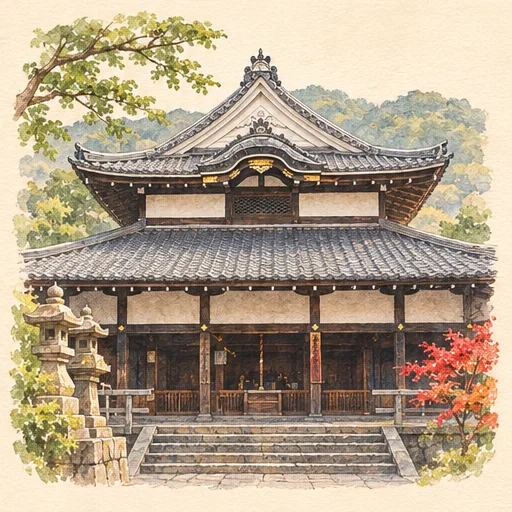
Spot it. Look for a row of orange-red posts under a broad, dark roof just before Okuno-in.
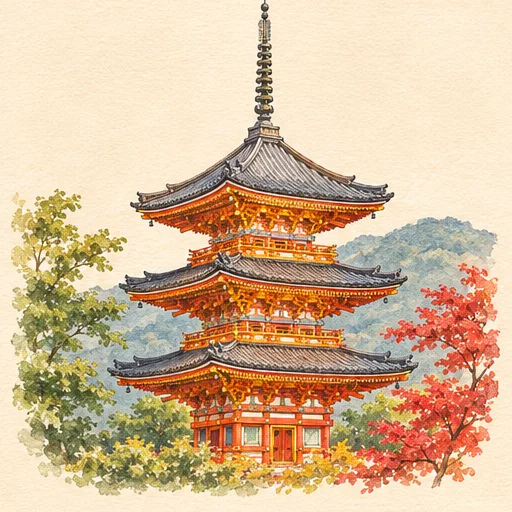
Three-story Pagoda
Dainichi and the wisdom of awakening
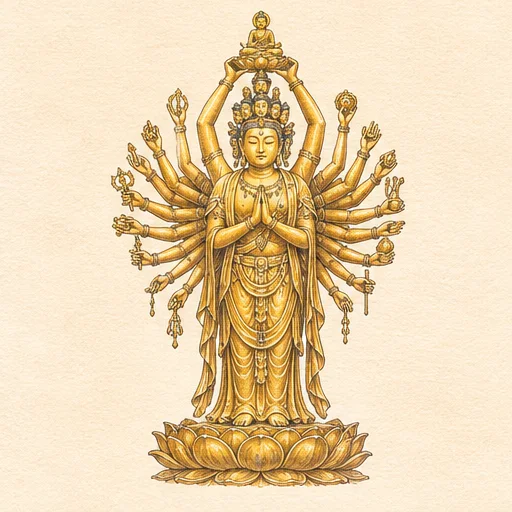
Who. Dainichi Nyorai means “Great Sun Buddha.” In Shingon Buddhism, Dainichi embodies the idea that the Buddha’s wisdom is present everywhere. Shingon practitioners use images, chants, and symbolic hand gestures to bring those teachings into their practice.
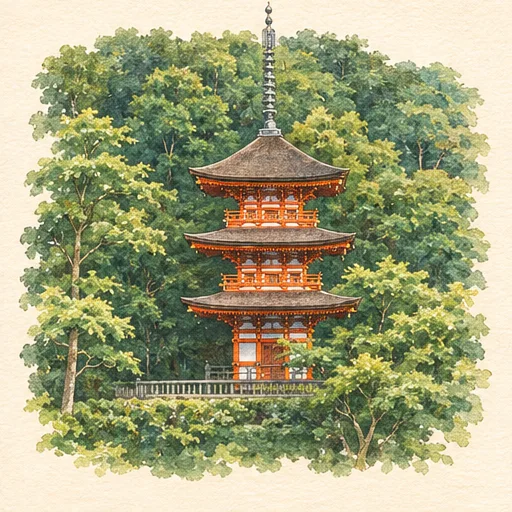
What you can see. Look for the three stacked roofs and the painted wooden supports beneath them. Dainichi’s statue and the paintings of eight Shingon teachers are inside, normally out of public view. The guide’s illustration shows a traditional depiction of Dainichi.
Shakyamuni Hall · Shaka-dō
The Buddha who taught
Who. Shakyamuni is Siddhartha Gautama, the historical teacher whose teachings became the basis of Buddhism. His story centers on understanding suffering and teaching a way to find release from it.
What is inside. The hall honors Shakyamuni with a group of three sacred figures centered on him. This is the teacher whose life and teachings gave rise to the tradition you’re seeing across the grounds.
Zuigudō Hall
Daizuigu and prayers for renewal
Who. Daizuigu is a Buddhist figure people turn to with personal wishes, including hopes for relationships, a safe birth, or raising children. The main statue is usually kept from view.
What happens here. When the ritual is offered, visitors can walk through a dark passage beneath the hall, reaching a stone where they pause and make a wish. The temple likens this passage to entering a womb. Emerging into daylight gives the practice its association with birth and renewal.
Koyasu Pagoda
Kannon and safe childbirth
Who. The smaller pagoda across the ravine houses Koyasu Kannon, a form of the same compassionate figure honored at the Main Hall.
What happens here. Families have come here to pray for a safe birth. Compare this tower with the taller pagoda near the entrance. Similar-looking buildings house different sacred figures, and this one gives Kannon’s compassion a very specific focus.
Otowa Waterfall
Prayer and purification through water
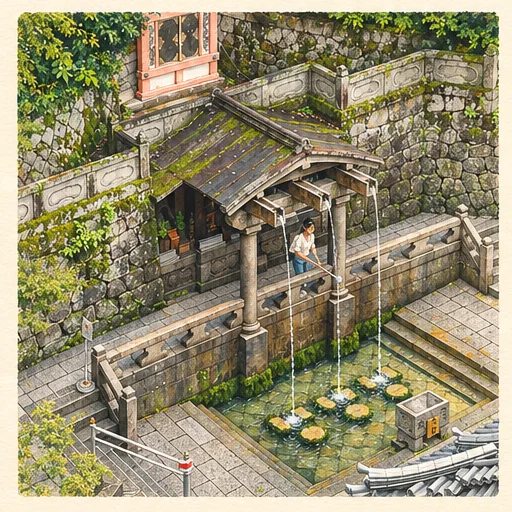
What is sacred here. In the temple’s founding story, a monk’s search for a spring led him here and laid the foundation for a temple devoted to Kannon.
What happens here. Visitors catch water from the falling streams with a long-handled ladle and pray. The temple describes it as cleansing the six senses. In this Buddhist usage, the mind counts alongside sight, hearing, smell, taste, and touch. The water is a way to pause, prepare for prayer, and make a wish.
Kasuga Shrine · near Jōju-in
A Shinto guardian on Buddhist grounds
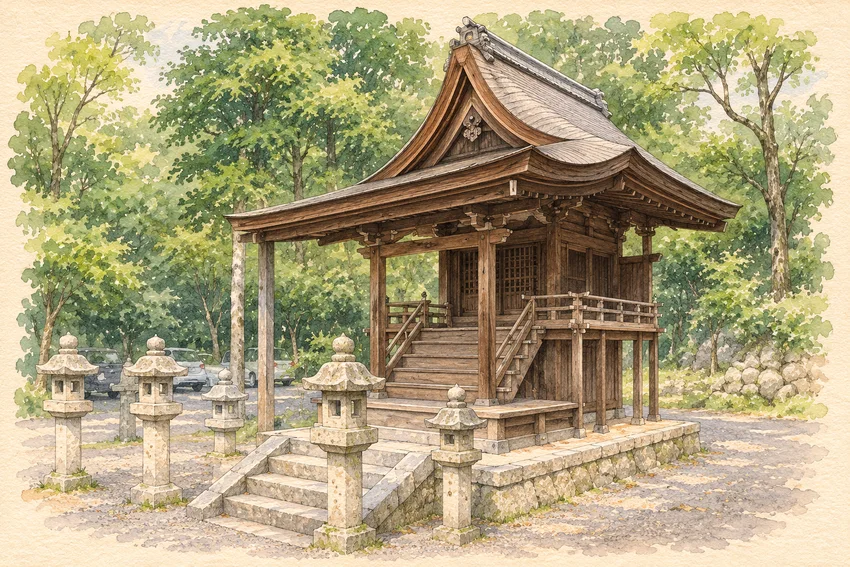
Who. This shrine honors a guardian brought into the temple’s religious life from Kasuga, a shrine in the city of Nara. In Shinto, a shrine is a place to honor a kami. At Kiyomizu-dera, this kami is revered as a protector of the temple’s Buddhist tradition.
What to look for. Find the small wooden shrine on the approach to Jōju-in. Its place within the Buddhist complex shows how worship of kami and Buddhist devotion have shared the same grounds in Japan.
Search for something you’ve noticed, like a bell, a dragon, or a waterfall. You can also search by name in English or Japanese.
Your temple visit
Discovery journal
Mark a stop as discovered or jot down what you noticed. Your progress and notes are saved in this browser.
Browser storage is unavailable. Your journal will last for this session.
Research & artwork notes
Open “Sources & visual references” in any discovery to see what the entry draws on. Where visitors usually can’t see a sacred image or interior, the guide labels the drawing as an interpretation. The map is a simplified picture of the grounds.